Every business owner running a digital marketing budget in the USA eventually lands on the same uncomfortable question. Google Ads vs SEO ROI, where does the money actually go further? The honest answer is that it depends on factors most people giving advice on this topic gloss over entirely. Timeline matters. Industry matters. Where the business sits in its growth cycle matters. And the mistake most businesses make is treating this as a permanent either-or decision when the reality is considerably more nuanced than that. This piece breaks down what each channel genuinely delivers, where each one falls short and how to think about the decision in a way that connects to real business outcomes rather than marketing theory.
Paid search is renting visibility. That framing sounds negative but it is not meant to be. Renting has genuine value in specific circumstances. You need traffic now. You are testing a new product or market. You have a seasonal window that cannot wait six months for organic rankings to develop. In these situations PPC vs organic is not really a debate, paid is the only tool that fits the timeline.
Google Ads places the business in front of people with documented search intent at a moment when they are actively looking. The targeting precision is real. Someone typing a specific commercial query sees an ad matched to that query. That is a valuable thing especially when the alternative is waiting.
The limitation is the economic model underneath it. Every click costs money. The same click costs roughly the same amount whether it is the first one or the millionth. There is no compounding. No asset building. No residual value when the campaign pauses. Paid media performance is linear in a way that organic search fundamentally is not and over longer periods that linearity becomes an increasingly significant disadvantage.
Cost per click across competitive USA industries has risen considerably over the past several years. Legal, financial services, insurance, home services in major markets, these categories run expensive. When cost per click is high enough, the margin math on paid acquisition can get genuinely uncomfortable even when the campaigns are well run.
SEO ROI looks completely different from paid search ROI because the economic model is different at a structural level. The investment is front-loaded. Content gets created. Technical issues get fixed. Links get built. Rankings develop over months rather than days. Nothing arrives immediately and in the early stages it is genuinely difficult to see the return on what is being spent.
Then something shifts. Pages start ranking. Traffic starts arriving without a cost attached to each individual visit. More content earns positions. The domain builds authority that makes future content rank faster. The cost per acquisition from organic traffic drops steadily because the fixed investment in the strategy is being spread across a growing volume of traffic rather than a fixed volume that only increases when more money goes in.
This compounding dynamic is what makes organic search so strategically valuable over a two to three year horizon. A business that invested seriously in SEO two years ago is now generating traffic at a cost structure that competitors relying on paid search cannot match without spending significantly more. The positions built through genuine optimization are also considerably harder for competitors to displace than paid positions, which disappear immediately when someone outbids you.
PPC vs organic is not a quality debate either. Organic traffic often converts at rates comparable to paid and sometimes better for certain query types because the trust dynamic is different. People who found a business by clicking a search result rather than an ad have a different relationship to what they found. That difference shows up in metrics like time on site, pages viewed and repeat visit rates in ways that compound commercial value over time.
Here is the part of the Google Ads vs SEO ROI conversation that tends to get softened because the honest version is uncomfortable.
SEO takes time. For new websites or businesses with weak domain authority, meaningful ranking movement on competitive terms can take six to twelve months of consistent work before results become clearly visible. That is a long time to explain to a business owner or a board why the investment is not yet producing visible returns.
Paid search delivers results on day one. Launch the campaign, traffic arrives, data starts accumulating. That immediacy is genuinely valuable and for businesses that cannot wait for organic results to develop it is not just convenient, it is necessary.
The mistake is treating paid search as a substitute for building organic presence rather than a bridge while organic develops. Businesses that rely exclusively on paid media performance for years wake up one day having spent enormous amounts on traffic with nothing accumulated to show for it. No domain authority. No content library. No organic positions. Just a recurring cost that must continue indefinitely or revenue drops immediately.
One underappreciated advantage of paid search for USA businesses operating in specific markets is geographic precision. Paid search Connecticut campaigns, for example, can target exactly the right audience in a defined area with a level of control that organic search cannot replicate at the same granularity.
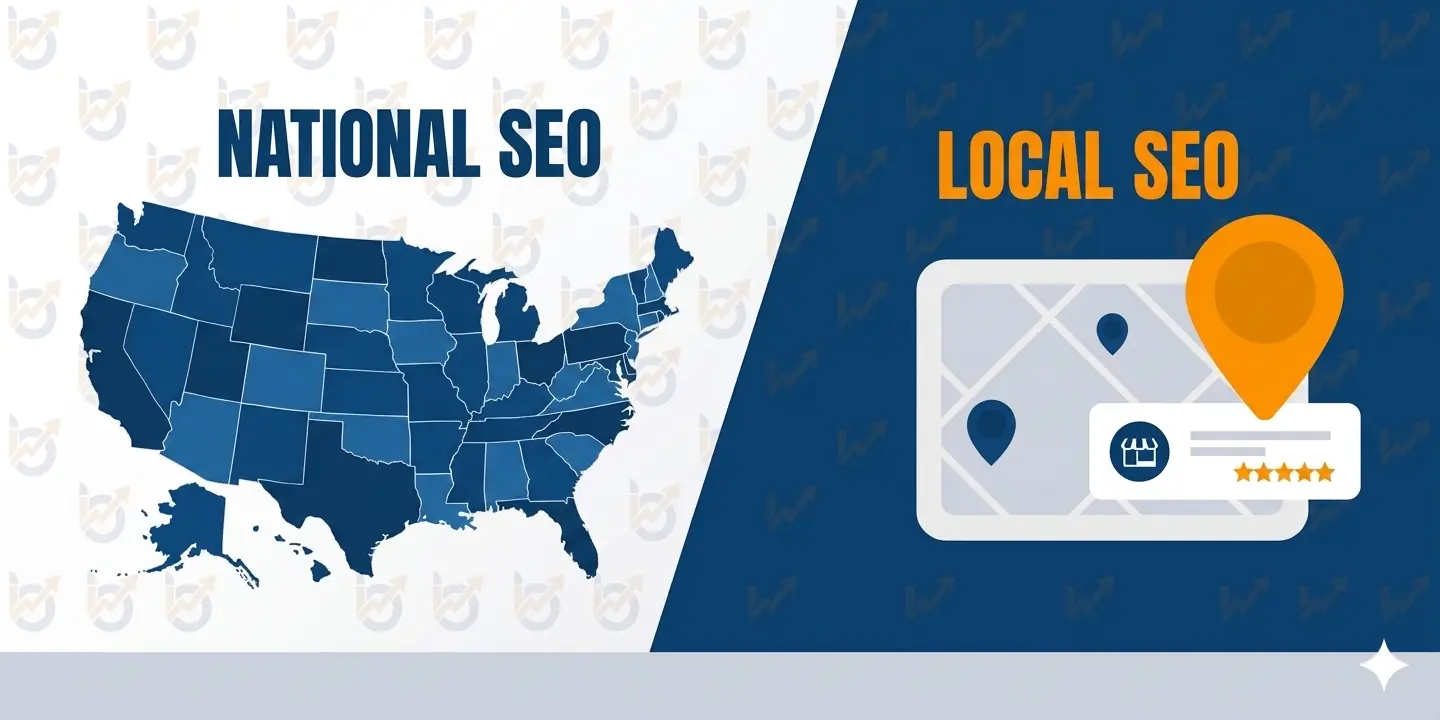
For local and regional businesses this matters considerably. National organic rankings bring traffic from everywhere. Paid campaigns bring traffic from the specific markets where the business actually operates. For a service business that cannot serve customers outside a certain radius, the ability to spend budget exclusively on the geography that matters is genuinely valuable.
This precision also applies to testing. Before committing to an organic content strategy targeting a new service area or product category, paid campaigns can validate whether that traffic actually converts for the specific business. The data arrives in weeks rather than months and the cost of learning is lower than the cost of building organic content around a hypothesis that turns out to be wrong.
IB2Marketing Paid Media Services works with USA businesses across every stage of this decision. Some come in needing immediate results from paid search while their organic foundation gets built. Some come in with strong organic presence and want to use paid strategically for specific campaigns and market entry rather than as their primary traffic source. Some come in having relied on paid media performance for years and needing help building the organic asset they never prioritized.
The starting point is always an honest assessment of what the business actually needs right now versus what it is trying to look like in two years. Those two things are often in tension and pretending otherwise produces strategies that serve neither timeframe well. IB2Marketing Paid Media Services builds around both, with clear logic for how each channel is being used and what it is expected to deliver within a realistic timeline.
Google Ads vs SEO ROI is not ultimately a competition. It is a sequencing and allocation question. The businesses generating the strongest overall digital marketing returns in the USA in 2026 are using both channels deliberately rather than defaulting to one and neglecting the other.
Is Google Ads or SEO better for a new USA business with no online presence?
Most new businesses benefit from running both simultaneously rather than choosing exclusively. Paid search provides immediate visibility while organic rankings develop, which takes time regardless of how well the strategy is executed. The paid campaigns also generate conversion data that directly informs which keywords and messages should be prioritized in the organic strategy. Starting paid-only and pivoting to organic later means losing months of compounding SEO progress that cannot be recovered.
How does SEO ROI compare to paid media performance over a two year period?
In most competitive USA markets, organic SEO produces a significantly lower cost per acquisition than paid media over a two year horizon because the fixed investment in content and optimization gets spread across growing traffic volume. Paid media costs remain linear, with each visitor costing roughly the same throughout. The crossover point where organic becomes more cost-efficient varies by industry and competition level but typically occurs somewhere between twelve and eighteen months of consistent SEO investment.
What makes paid search Connecticut campaigns different from national paid campaigns?
Geographic targeting in paid campaigns allows businesses to spend budget exclusively on users in defined locations, which is particularly valuable for regional service businesses that cannot convert customers outside their service area. National campaigns reach broader audiences but include significant traffic from markets where the business cannot operate. Regional campaign targeting improves conversion rates by ensuring the audience seeing the ads can actually become customers, making paid media performance measurably more efficient for location-dependent businesses.
Industries with high commercial intent and urgent customer needs, such as legal services, home services, healthcare, insurance and financial services, often see faster ROI from Google Ads. Since users are actively searching for solutions, paid campaigns can generate leads almost immediately when properly optimized.
Not necessarily. As SEO gains traction, businesses can reallocate paid budgets toward high-converting keywords, competitive search terms, new market expansion and seasonal campaigns. The most effective strategy is often using SEO for sustainable traffic while leveraging Google Ads for targeted growth opportunities and immediate demand capture.
A Performance Marketing Company Delivering Results-Driven Solutions For Businesses
Have a question? We’d love to hear from you. Send us a message and we’ll get back to you as soon as possible.
Send 609-596-5511