Something changed in how people search and most businesses have not noticed yet. The shift is not dramatic on the surface. People are still typing questions. Still looking for recommendations. Still trying to find the best service provider in their area or the answer to something they cannot figure out on their own. What changed is where those answers are coming from. Answer engine optimization exists because the destination for those questions increasingly is not a list of ten blue links. It is a single, direct answer generated by an AI. And if your business is not structured to appear inside that answer, you are invisible to a growing portion of the market regardless of where you rank traditionally.
Ask most business owners how their customers find them online and the answer involves Google. Rankings. Maybe some paid ads. The assumption underneath all of it is that search means a results page full of links that a human chooses between.
That assumption is breaking down.
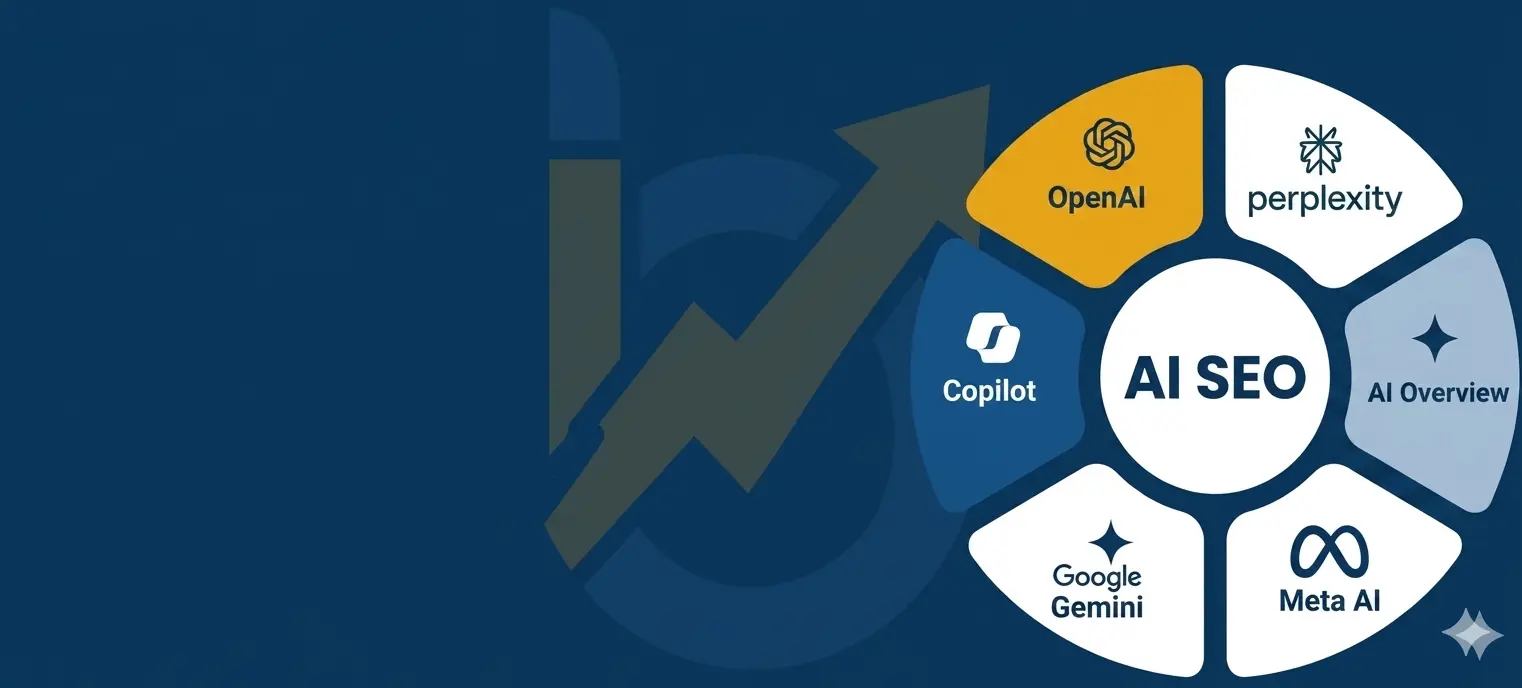
Perplexity answers questions directly with citations. ChatGPT gives recommendations when people ask where to go or who to hire. Google's AI Overviews appear above organic results on an enormous percentage of commercial queries. The behavior driving this is simple. People want answers not options. They want the decision made for them or at least heavily guided before they click anywhere.
This is where AEO vs SEO starts to matter in a practical way. Traditional SEO earns a position in a list. Answer engine optimization earns a position in the answer itself. Those are genuinely different things and chasing one while ignoring the other is a strategy with a visible expiry date.
AEO is not a rebranding exercise or a consultant's way of charging for things that already existed. It is a real shift in how content needs to be structured to satisfy AI systems that are selecting, summarizing and presenting information rather than linking to it.
When ChatGPT answers a question about the best marketing agency in a particular city, it is not running a search and picking a winner at random. It is pulling from structured sources, authoritative content, consistent mentions across the web and signals that indicate trustworthiness and relevance. AI search optimization is the process of making sure your business generates those signals rather than hoping they appear organically.
The practical difference from traditional SEO comes down to intent matching at a granular level. Traditional SEO optimizes for keywords. Answer engine optimization optimizes for questions. Specifically the questions your target customers are typing into AI tools, voice assistants and AI-enhanced search interfaces. The content that wins in this environment is content that answers those questions directly, completely and in a format that AI systems can extract and present confidently.
Google's featured snippets have been around for years and most SEO practitioners understand them reasonably well. A page that directly answers a query in a clean, structured format earns the snippet. The snippet appears above organic results. It gets more clicks than a traditional result at the same position.
What featured snippets actually demonstrated is the direction search was always heading. The preference for direct answers over links to answers. AI tools have taken that preference much further but the underlying logic was already visible in snippet behavior years ago.
Winning featured snippets still matters. It also provides a useful framework for thinking about AI search optimization more broadly. Pages that earn snippets tend to have specific characteristics. They answer the question in the first paragraph without burying it. They use clear headings that match how the question is phrased. They provide context around the direct answer without padding. They are formatted in a way that separates distinct pieces of information clearly.
These same characteristics make content more likely to be cited by AI tools. The overlap is not coincidental. It reflects what structured, clear content looks like regardless of which system is evaluating it.
Structured data schema is the part of AEO that technical SEO practitioners already understand but most content teams have never engaged with seriously. It is code added to a page that tells search engines and AI systems precisely what type of content exists there.
A page about a local service business with proper LocalBusiness schema tells every system reading that page exactly what the business does, where it is, what hours it operates and how to contact it. A FAQ page with FAQ schema tells AI tools that the page contains question and answer pairs and makes those pairs significantly easier to extract and present.
For AI search optimization specifically, structured data schema reduces the interpretive work that AI systems have to do. When the content is ambiguous, AI tools make judgment calls about what information to surface and those calls do not always go the way the business would want. Explicit schema markup removes much of that ambiguity. It is the difference between telling the system directly what you are and hoping it figures it out correctly.
The phrase ChatGPT SEO sounds strange if you are used to thinking about SEO as exclusively a Google-focused discipline. But businesses are actively being recommended or not recommended inside ChatGPT conversations every day. Someone asking for the best accountant for a small business in their state. Someone asking which digital marketing services are worth paying for. Someone asking what software to use for a specific workflow.
ChatGPT pulls from its training data, from browsing when enabled and from the general authority and consistency of how a business or topic appears across the web. Businesses with clear, consistent, well-structured online presences that answer questions directly tend to appear in these recommendations. Businesses that exist primarily as a homepage with some service descriptions and a contact form tend not to.
The content strategy implications of this are significant. Publishing genuinely useful content that answers the specific questions your customers are asking is not a new idea. What is new is that this content now needs to satisfy AI systems reading it, not just human visitors landing on it. Those are mostly compatible goals but they require deliberate execution rather than content created primarily for search engine crawlers.
IB2Marketing AEO SEO Services works with USA businesses that recognize the search landscape has shifted and want to be positioned correctly for where it is heading rather than optimized for where it was five years ago.
The work covers both sides of the equation. Traditional SEO foundations matter because AI tools still pull from authoritative, well-ranked content. Domain authority, technical health, quality backlinks and proper on-page optimization all feed into how seriously AI systems treat a source. Businesses that neglect these fundamentals do not get rescued by AEO tactics alone.
On top of that foundation, IB2Marketing builds the specific elements that answer engine optimization requires. Structured data schema implemented properly across relevant page types. Content restructured around question-based search behavior. FAQ sections built to match the actual queries customers are typing into AI tools. Consistent brand presence across the sources that AI systems pull from. And ongoing monitoring of how the business appears inside AI-generated answers rather than only tracking traditional ranking positions.
The businesses that figure this out now while most competitors are still focused entirely on traditional search are building an advantage that will compound as AI-mediated search continues to grow.
What is the difference between AEO vs SEO in practical terms?
Traditional SEO earns positions in search result lists that humans then choose between. Answer engine optimization earns positions inside the actual answers that AI systems generate, meaning the business gets cited or recommended directly rather than listed as an option. Both matter and the strongest strategy addresses both rather than treating them as competing priorities.
Why does structured data schema matter for AI search optimization?
Structured data schema gives AI systems explicit information about what a page contains rather than requiring them to interpret it. This reduces ambiguity, increases the likelihood of correct information being surfaced and makes content easier to extract for use inside AI-generated answers. For local businesses especially, schema that communicates location, services and contact information clearly is foundational to appearing in relevant AI responses.
How does ChatGPT SEO differ from optimizing for Google?
ChatGPT draws from training data, browsing capability and the general quality and consistency of how a business appears across the web. Creating authoritative, question-answering content that is structured clearly and appears consistently across reputable sources increases the likelihood of appearing in ChatGPT recommendations. The underlying content quality requirements overlap significantly with good SEO practice but the execution needs to account for how AI systems read and extract information rather than just how they rank pages.
Local businesses can improve visibility in AI-generated answers by creating content that directly addresses customer questions, implementing structured data schema, maintaining accurate business information across online directories and building authority through reviews, mentions and backlinks. AI systems look for consistent, trustworthy signals when deciding which businesses to recommend, so accuracy and credibility across the web are essential.
No. In many cases, small and mid-sized businesses can benefit even more from answer engine optimization because AI tools often prioritize relevance and clarity over brand size alone. A local business with well-structured content, strong schema markup and clear answers to customer questions can earn visibility in AI-generated responses even when competing against larger companies with bigger marketing budgets.
A Performance Marketing Company Delivering Results-Driven Solutions For Businesses


Have a question? We’d love to hear from you. Send us a message and we’ll get back to you as soon as possible.
Send 609-596-5511